 Good Houses
Milton Keynes
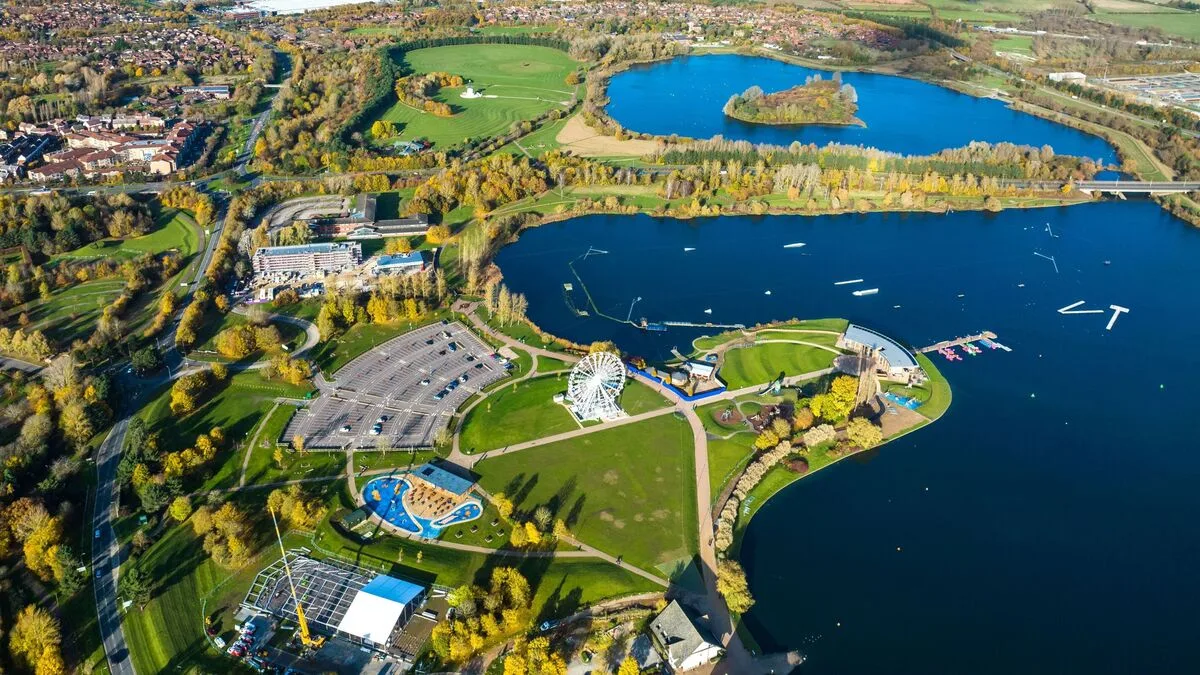
Milton Keynes is a calm, practical place to own a house, and an unusually easy one to get work done in. The commute to London and to the other large cities nearby is why most people arrive, and the layout is why they stay: almost everything in the city is within a five to ten minute drive. It is also one of the greenest cities in the UK, with lakes and parks throughout. One detail matters more to anyone renovating than the lifestyle guides suggest. Milton Keynes is where the surrounding towns come to buy things. Travis Perkins, Wickes and B&Q are all here, along with tile and bathroom warehouses, so materials are easy to source locally and trades are plentiful rather than fought over. Most of the housing went up after the new town was designated, so the stock has a known age and fairly predictable needs. There are older pockets, and they are among the most desirable addresses in the city: the Shenleys, Loughton and Middleton. What surprises many buyers is how many large detached houses there are.
Average prices
- Detached
- £550,351
- Semi-detached
- £324,545
- Terraced
- £269,468
- Price per m²
- £3,980
Building here
- Labour cost band
- Average
- Trade availability
- Plentiful
Construction varies by estate. Some of the older estates were built to the methods of their day and the newer ones are standard modern new-build, so check the individual house instead of assuming a Milton Keynes type. On stock from the 1970s to the 1990s, windows are usually the first thing to show their age, then roofs. Conservatories are the other common item. A great many were added when they were fashionable, and those are now worn out and generally need either replacing or removing. Article 4 directions here do not restrict ordinary householder work on the post-1967 estates. They apply to the older settlements. In the Wolverton conservation area, permitted development is removed for extensions and alterations to any elevation fronting a road, including painting and including side elevations on corner plots, along with hard surfaces, walls, and satellite dishes to the front. Rear work is not affected. Olney is broader: extensions, alterations, porches and painting exterior walls all need permission there, while outbuildings, hard surfaces and boundary walls are not covered. Further directions apply across a number of the outlying villages, and a borough-wide direction removes the right to convert a house to a house in multiple occupation. So permitted development cannot be assumed in the older parts of the city, and it generally can be on the estates. Planning and building control here work faster than in many other councils, and standard applications for normal work are usually accepted. Gardens are normal to small even on larger houses, but there is usually room for a three to four metre extension, which is part of why garage conversion has become popular. No specific local ground, drainage or era-related building fault is known.
What adds value here
Broadly the same things as anywhere else, with three local exceptions worth budgeting around. Privacy. The estate layouts put houses close together, so a garden that is genuinely private and not overlooked is worth real money here. Parking. Milton Keynes is a car city and off-street parking is priced accordingly. Plot size. Gardens and plots are normal to small even on large houses, so anything with a bigger plot stands out. The buyer profile is families and working professionals, and the owner age range is fairly young. Extra bedrooms, more living space and parking are all on their list. Open-plan kitchens and extended living rooms are wanted, and low maintenance sells: the easier a house is to run, the faster it goes. Air conditioning is becoming more popular here, particularly after the heatwaves of summer 2026. Garage conversion is worth thinking about carefully. Many owners have converted, especially where a double garage offers real space. On larger detached houses in the more affluent estates a garage is still treated as a must-have, so it comes down to whether the plot leaves somewhere else for cars, storage and bikes.
What doesn't
Swimming pools. A home office adds less here than in most commuter towns, because most Milton Keynes floor plans already include a study. It is not a differentiator when the house next door has one too. Gated driveways are common in London and across several of its boroughs and have not carried across here, even on the detached stock. Anything that breaks the pattern of the street is a poor bet, and here that is enforced as well as preferred. The council will specify that a garage conversion matches the brickwork or style of the existing house.
What buyers want in Milton Keynes in 2026
There is no single Milton Keynes buyer, and the useful split is by price rather than by street. Around the ordinary three and four bedroom stock, buyers are comparing houses that are much alike, so the decision comes down to affordability, condition, parking and whether the layout works. Plain freehold houses have the deepest buyer pools here, and a house sold on one striking feature tends to do worse than one sold on being sound and easy to live in. School catchment and a quiet setting carry more weight than the national lists suggest. At the top of the market, in Woburn Sands and Stony Stratford, the proposition changes. Those buyers are paying for location, character, space, privacy and schools, and they take longer to decide. Bletchley, at the other end, moves quickly. Prices across the city have been broadly flat over the past year, a typical sale takes around a month, and a meaningful number of homes either reduce or sit for much longer. That sets the local rule for anyone spending before a sale. Creating a feature rarely returns the money here. Removing the reasons a buyer knocks money off usually does: poor condition, tired presentation, unclear parking, a neglected garden, obvious maintenance, an awkward layout, or anything that leaves a buyer uncertain about the house.
Where people buy in Milton Keynes and why
-
The Shenleys (MK5) Premium
Leafy and desirable, with large detached houses and some of the older housing in the city.
Suits: Families wanting space with good access to the station and schools.
-
Loughton (MK5) Premium
One of the premium residential estates, with large detached houses, very close to Milton Keynes Central and the shopping centre.
Suits: Families and commuters who want to be near the station.
-
Woburn Sands (MK17) Premium
Village feel, attractive and upmarket. Technically just outside Milton Keynes and closer in character to the surrounding villages.
Suits: Buyers who want a village address within reach of the city.
-
Furzton (MK4) Average
An established estate built around Furzton Lake, with a lot of green space, mature landscaping and good Redway access. Convenient for Westcroft, Bletchley and Central Milton Keynes, and one of the more established MK4 estates.
Suits: Families who want an established, leafy estate rather than a new one.
-
Tattenhoe (MK4) Average
Quiet and modern, with larger modern houses, quieter streets and a lot of open space. Local demand is strong and it currently rates very highly among Milton Keynes areas.
Suits: Families wanting modern housing and a quiet street, at the more affluent end of the middle of the market.
-
Walton (MK7) Average
Green, spacious and established, on the south-east side. A lot of greenery and attractive surroundings, with schools and amenities nearby and Willen and Caldecotte close by.
Suits: Families who want space and greenery with quick access to the M1.
-
Broughton (MK10) Average
A popular modern family suburb with village roots, mixing newer estates with the original historic village. Good housing stock, schools and amenities nearby, and a good Redway network.
Suits: Families wanting modern housing with easy access to the M1.
-
Willen (MK15) Average
Leafy and desirable, built around Willen Lake, with parks, water activities and a lot of open space. More character than many of the newer estates.
Suits: Buyers who want an attractive setting with the lake and parks on the doorstep.
-
Middleton (MK10) Average
A quiet, village-style pocket with genuine historic character. The historic Milton Keynes Village sits here, with older village houses, a village green feel and The Swan Inn, while the surrounding area is modern housing and Oakgrove School.
Suits: Buyers who want character rather than a typical Milton Keynes estate.
What people paid in Milton Keynes
Real costs submitted by homeowners here, and checked before publishing.
-
Bathroom renovation: £1,850
2026 · Includes2 photos
Add what yours cost
Not a trade estimating a job it wants to win and not a national average that fits nowhere. Real jobs, real costs, posted by the people who footed the bill.
Add yours to the prices above and the picture gets sharper for everyone planning the same work in Milton Keynes. It takes less than 3 minutes.
Add what you paidGet the Good Houses newsletter
Latest updates and data, what the work really costs, what it adds when you come to sell and more.